
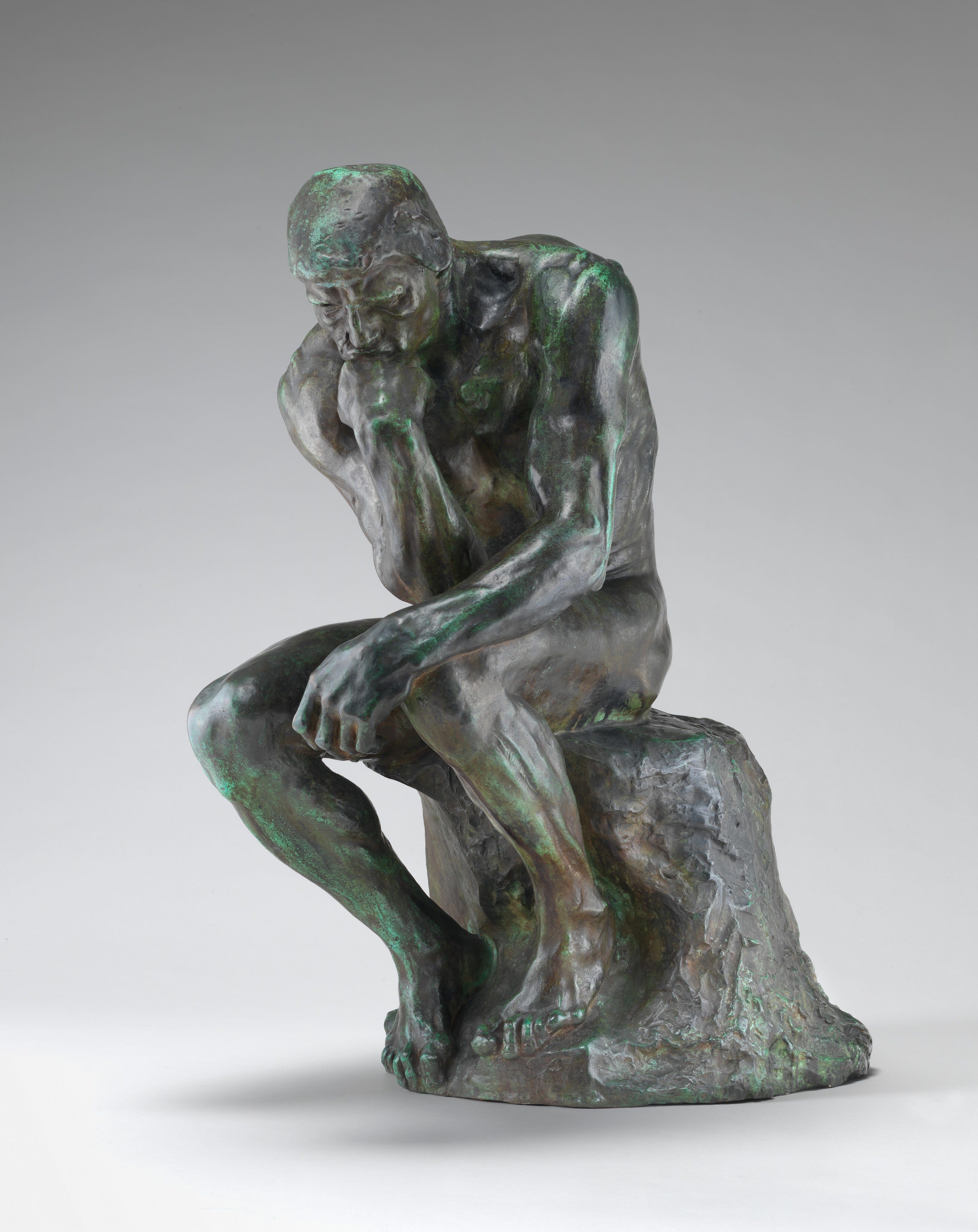
To study literature is to study humanity; this, at the risk of sounding clichéd, we know to be true. Among the multitude of ideas it introduces us to is the idea of hubris – a tragic flaw that causes the downfall of a noble, tragic character. So, as students of literature, at the risk of reducing complex and layered creations, we isolated the singular tragic flaws of the characters we met – if Macbeth’s flaw was overarching ambition and Othello’s was jealousy, what could one say about Hamlet? To me, Hamlet’s was indecisiveness – in other words, the thinker’s folly.
“To be, or not to be: that is the question / Whether ‘tis nobler in the mind to suffer the slings and arrows of outrageous fortune/ …” Hamlet’s celebrated soliloquy (Act 3, Scene 1) may be regarded as the anthem of existential angst. I do not blaspheme when I say this, nor is it my intention to trivialise literature. I have resonated with these lines from Hamlet because they capture my lifelong wrestle with indecisiveness. Though I console myself with this reassuring, but what I suspect to be ultimately false, narrative – this is the price I pay for seeing more than one perspective (or so I want to believe) of/to any given situation.
All this sounds passably bearable until this character flaw creeps insidiously into the tiny little things that make up life and living. Picture this scenario – a dinner out with friends/family – the usual question: what will you have? Everyone else is ready with their answer, et moi, I am struggling, and what eventually emerges is anything (sometimes mercifully with caveats) as long as it is not this, that, or this. Anything??!! For those that regard food as religion (my family AND friends would then qualify as fanatics), ‘anything’ is waving the proverbial red flag, and I have now triggered a wave of eye rolls down the table.
“To be or not to be” was never written for princes alone; lesser mortals agonise over it too for the banal and the mundane.
I confess this is a trite, almost embarrassingly trivial example. In my poor defence, this was merely to prepare context for more profound weighty situations and scenarios.
I was not spared this in my professional life either; as a teacher, I find myself enmeshed in this struggle very often – I simply cannot bring myself to chastise students in harsh tones unless I am certain that the trespass committed is one I myself would never be guilty of. And if I am guilty of it, then by what rights do I scold someone else? Do not, do not be hasty and presume that a lack of meltdown moments translates to control or serenity. One would think that the passage of time and the years would be kinder. That clarity of thought and certainty of beliefs would dawn with time. Wrong. Gloriously wrong. Becoming a mother has only introduced another dimension – now I ask myself before I reproach a young student, “Am I sure that my own child would never do this?” I falter then.
Just in case of the dining out scenario – mercifully, I know what is not acceptable (under any circumstances), and try as I might, I can think of two unpardonable lapses for a student – a lack of courtesy in human interaction and a deliberate choice to attempt unfair means during exams. This is when I spew vitriol. Most other times I appear unruffled, not because I have conquered my baser instincts – but simply because the voice in my head beats incessantly: “Are you sure? Are you really sure?”
So, am I overthinking? Of course I am. Am I doubly guilty of overthinking about trivialities (in the larger scheme of things)? Maybe I am. Does this behaviour/trait imply ambiguity of convictions? I hope not.
There are many who go through life without ever having entertained a doubt of any hue, who are able to point an accusatory finger with certainty, whose lives are clearly demarcated into sharply divided worlds of black and white (and the twain shall, of course, never meet). I marvel at them. I don’t claim to understand. My imagination is, of course, unequal to this task.
I can only speak for myself; I battle with self-doubt far too often for my comfort. I wonder in doubt, and I want to believe that I live in the colourful greys. Those tiny ineffable palettes of colour that may not have a name, that do not assert their presence or superiority, but exist blissfully.
As I write this, I am fully aware that a minutiae of factors contribute to making the armour that we call ‘persona’, and that in my feeble attempts at simplifying I may be inadvertently diminishing a complex picture.
Despite everything, every ‘belief’ that the world forcefully asserts, and every lie we are fed on, Hamlet lives and strives.
What I do really want to do is to declare – Hamlets of the world, unite! We have nothing to lose except our doubts.
I have never read a line that I could relate to with such depth. Your writing of Hamlet made me realise that his tragedy was never simply indecisiveness, it was intelligence burdened by awareness. Hamlet is able to see every side of every decision, and that becomes his curse. He overthinks morality, consequences, justice, and existence itself until thought turns into paralysis. He wants revenge, yet questions whether revenge itself is right.
Perhaps that is why minds like Hamlet’s suffer not because they cannot think, but because they can understand both “to be” and “not to be” with equal depth. And when you can inhabit both sides completely, choosing one can feel like betraying the other.
Here most of us think that we are alone. Not knowing what we want. Looking at others seeing how effortless decision making is for them. Than the guilt comes with taking too much time to decide....thinking if it is already too late....
I am quite glad to know that Shakespeare was able to write something I would feel 400 years later. The magic of literature never fails to amaze me. Whenever I am drowning in the depth of despair and guilt it reaches out with it light. But I never seem to remember that there is something which I can never be indecisive about. That when you came..goddess..Thank you for being the anchor of my soul.
Hamlet stood on a castle wall and could not choose. We can’t choose either. The century changes, the hesitation doesn’t. Thanks for the nice writeup.