
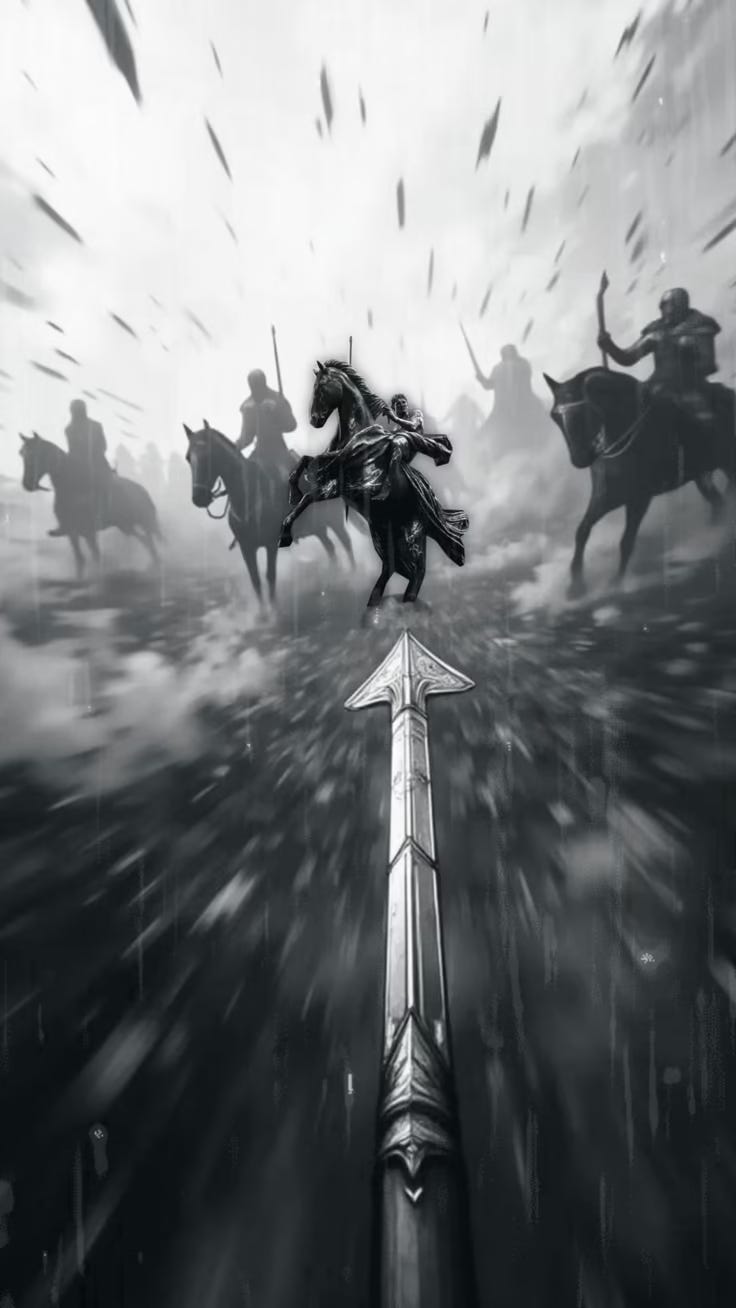
When the present weighs heavily on us and the future seems nebulous, in a desperate attempt to make sense of overwhelming events, we turn to the past hoping to find patterns if not answers. Recent world events which do not need elucidation are a case in point.
So, what is the past I refer to? Not the sombre, objective discipline of History, but the mist shrouded world of myth and mythology. Mythology to me, existing as it does in other realms, is a lighthouse that spreads its arc of beam onto psychology, collective human imagination, and the eternal truths we seem to grapple with and have not found answers to. It is after all, Literature. No neat solutions, no clear answers, just a gaping void.
The Iliad, The Odyssey, The Mahabharata- to name but a few, stand as testimonies to the horror that war is. There is of course, enough scholarly discourse on these epics to fill libraries and they contain learning that is difficult to compress and comprehend in a single lifetime. That apart, most myth lovers and votaries of mythology will secretly or unabashedly confess to having a singular character or characters that dominate and colour their imaginary and emotional landscape.
With reference to the Indian epic Mahabharata- one character that overshadows all others, to me (my individual bias and taste) is Karna. To a vast majority of Indians who revere the Mahabharata as a sacred text – there is only one hero in the Mahabharata- Krishna. Mortals of course cannot be compared to Gods.
While mythology seems to be undergoing a revival (of sorts) there is always that one or two or three books that if you are lucky enough, you will encounter, that will seal your bond with mythology. For me, as regards the Mahabharata it was – Irawati Karve’s Yuganta, Pratibha Ray’s Yajnaseni and Chitra Banerjee Divakarunni’s The Palace of Illusions. I devoured these works. Undoubtedly, Draupadi is a smoldering figure (more about her in a later post) but Karna? He stayed long after the story was over. Allow me to explain myself. Allow me also, the indulgence of a personal rumination from the past.
But before I invite you to delve into the past, caveat-the characters we admire (and despise) are in all probability our mirrored selves or aspired selves. This is common knowledge.
Karna, Antigone, Cordelia- I certainly have a penchant for the underdog! That again must wait for another day, another post.
The year is 2011. As participants at a story telling workshop our assigned task is to create a story to be narrated. For reasons not known or for sheer paucity of ideas and imagination – I decide to write a story with Kurukshetra as the narrator. Cliched? Yes. Lacking in ingenuity? Yes. I plead guilty on all counts.
Bear with me, while I try to make my point, albeit, convolutedly. Here is the story I wrote almost 15 summers ago .
Let me introduce myself- I am Kurukshetra – battleground of one of the fiercest battles in human history. I was witness to the hesitation of a mortal, a prince forced to take up arms against his kinsmen. I have been drenched in blood, my unheard lament an echo of the wails of women and children. All this I have tried to exorcise.
In the midst of all this I have also seen a mortal who came to be admired by the gods themselves. This is the agony and story of a prince among men, a man wronged by the circumstances of his birth, a man who lived his life by a self-imposed code. This is the story of Karna.
Who was Karna? Why is he important ?
The palace grounds are teeming with excitement. Dronacharya, the venerable teacher of the royal princes stands proud as his royal proteges display their prowess. It was evident to all, that Arjuna, was an archer beyond parallel. As Arjuna basks in the adulation of the audience, a young lad of radiant countenance and distinguished carriage strides in and in quiet but firm tones says, “Master, I respectfully offer a challenge.” He matches Arjuna’s skills feat by feat; he is as good if not better than Arjuna. Suddenly a voice calls out, “declare your lineage young man.” The young lad crumbles and turns silent. The royal charioteer ambles towards him murmuring, “my son , my son.” The cruel sneers of, “he is no royal prince- he is a charioteer’s son!” ring in his ears. The next few moments are seared in Karna’s heart forever. Duryodhana, the eldest of the Kaurava princes walks towards him. His piercing voice declaring, “it matters not who the father of this brave, young lad is. A man should be judged by his actions, not his antecedents. I hereby proclaim him – the ruler of Anga. All hail Karna – the King of Anga, friend to Duryodhana and equal in every way.” All eyes turn towards Karna. Was it a play of light or did the onlookers imagine it? It seems as if Karna is bathed in golden sunlight, his face radiant, the sun – a halo behind him. Karna looks at Duryodhana and whispers- “for this my life and my loyalty to you, forever.”
Karna has lived his word. Even when his heart recoiled in horror and his mind was a seething tempest of misgivings, he stood stead fast by his friend. The war has battered his heart, the battlefield no longer enthuses him and Karna is a weary man. He wishes, oh how he wishes that he had never challenged the Pandava princes so many eons ago. He smiles wryly, perhaps he would have been happier as a charioteer’s son! So much for the folly of youthful vanity! He sighs, too late, too late now. He makes his tired way to the river, where he offers his daily prayers to the Sun God. He stops in his tracks. His ears have picked up muffled sounds- footsteps or someone sobbing? He turns around to face the unmistakable outline of a woman’s form and her flowing garments. She lifts her veil. Karna recoils. It is Kunti, mother of the Pandava princes. He quickly regains his composure, “You are perhaps lost and far away from the camp, please allow me to escort you back safely.” After what seems like an eternity, Kunti looks up, her eyes brimming with tears. Wait. Her eyes, what does Karna see in those eyes? Compassion? Pity? Fear strikes his heart. A sense of foreboding descends on him. Kunti speaks, her voice barely audible beneath the tremors of her sobs, “It is you I seek. I must speak now. Far too long have I held my silence. If my confession can end this carnage so be it...” She continues to speak, to Karna’s ears the words are just fragments for he cannot hear her, all he can hear is the roar of his heart… He catches fragments… “ My son…, son of the Sun God… Come away... your brothers will accept you.” Karna pleads, “stop... please stop.” His eyes are ablaze “Why ? Why now?… Where were you? Where were you when I needed you?” Each word a whiplash.
Kunti stands still. Tears streaming, her voice feeble, “Come away son. Duryodhana will never win this war. Ahead lies only death and destruction...”. Karna hears nothing. Abandon Duryodhana? Could he? Would he? His mind swirls. He turns to Kunti, his eyes devoid of any emotion. Kunti knows, she has lost him, yet again, perhaps irrevocably. She whispers, “promise me you will not kill your brothers,” her arms reaching out tremulously. He flinches but notices how frail her arms seem. He replies, “ I promise you; you will have five sons.” Brothers? What does that even mean? How strange those words sound. Images from the past flicker in quick succession. Humiliation, contempt, disgrace and in the midst of all this stands Duryodhana. His eyes are now steel. His mind is made up.
In the course of the war Karna’s chariot wheel will get stuck and as cursed by his divine teacher Prasurama - his knowledge will desert him when he needs it the most. Prophecies must be fulfilled. He turns a pleading eye to deaf heavens. Alone, unarmed as Karna is, Arjuna’s arrows find their fatal mark.
I, Kurukshetra witness to the fall of countless, will never forget the moment Karna sinks to the ground, his life breath leaving him, his eyes raised heavenwards and the hint of a smile on his face. That was the precise moment the sky turned its darkest hue, the sun blotted out completely. All eyes are raised skywards- sunset already? Confusion reigns.
For me, it’s a long, agonizing wait, before the war ends, leaving as all wars are wont to- destruction and ravage in its wake.
And Karna- what about him ? His choice – would it have been yours ?
Note – I owe an immeasurable debt of gratitude to the books, ideas and words that shaped me and have become over the years, what I can best describe as embedded thinking and feeling. Do I really know where I as an individual end and where the ideas that shaped me begin? Do any of us? Is that not one of the many triumphs of all Art/Literature?
Your writing has always transported me to another time and emotional landscape. It’s such a lovely coincidence that I’m currently reading The Palace of Illusions, and I’m really looking forward to finishing it (Draupadi has just learned of her prophecy), which made this feel even more resonant.
What I find most compelling about Mahabharata, is how difficult it is to clearly define heroes and villains. Even figures like Karna feel deeply complex like his role in Abhimanyu’s death, for instance, challenges any straightforward idea of Kshatriyas. It all seems to come down to interpretation, which is perhaps what makes these stories endure so powerfully and for a long time.
Beautiful Neena. I was totally lost in those words of Kurukshetra, that spoke of the valiant Karna.